


More than a shorter URL
When the first link shorteners appeared, the brief was simple. Twitter had a character limit. Web addresses were stuffed with tracking parameters. A shorter link was genuinely useful.
Today, a link is the first point of contact between a brand and a user. It's a measurable component of a campaign. It's a source of behavioural data about the people who click on it. That's why modern shorteners have grown into full link management platforms — not just character-saving utilities.
If you're new to URL shorteners, our guide on What Is a URL Shortener? explains how they work and why they have become an essential part of modern digital marketing.
A link is part of your brand
Before anyone clicks, they glance at the URL. It happens almost unconsciously.
A long address packed with numbers, parameters and unreadable strings doesn't inspire much confidence. It can look messy, even suspicious.
A clean, readable link looks professional. The difference between sharing something like:
https://company.com/blog/article?id=4873&utm_source=newsletter&utm_medium=email&utm_campaign=launch
and:
go.company.com/launchgoes well beyond appearance.
Custom links reinforce brand recognition. They build trust with the person on the other end. They're easier to share in print, in conversation, in a slide deck. In a landscape where credibility matters more than ever, even a URL shapes how people perceive a business.
Every click tells you something
Sharing a link is only the starting point. What happens next is where the real value sits.
How many people clicked? Which countries did they come from? Were they on mobile or desktop? Which campaign drove the best results? Answering those questions tells you what's working — and what isn't.
That's why click analytics have become one of the most valued features in modern link platforms. It's no longer about counting clicks on a URL. It's about understanding user behaviour and measuring the actual performance of each campaign.
When every acquisition channel is competing for attention, having reliable data is the difference between guessing and deciding.
Campaign management should be straightforward
Campaigns shift constantly. A product goes out of stock. A promotion ends. A landing page gets updated.
But the links you've already shared — across social media, newsletters, ads, videos, even printed materials — those stay where they are. Going back to edit every single post or reprint every flyer isn't realistic.
This is where one of the most practical features of a link management tool comes in: the ability to change where a URL points without touching the public-facing link itself.
The same short link can stay active for months, even years, while the destination behind it evolves. It sounds like a small thing. In practice, it saves a significant amount of time and prevents traffic from landing on outdated pages.
QR codes aren't static any more
The rise of QR codes has given links a prominent role outside the digital space as well. You'll find them in restaurants, shop windows, on packaging, business cards, leaflets and event materials.
But a traditional QR code has an obvious limitation: if the destination URL changes, the printed code becomes useless.
When the QR code points to a managed link, that problem disappears. You can update the destination at any time without reprinting anything. For campaigns that run over weeks or months, that flexibility is worth a great deal.
Far more than sharing links
A few years ago, shortening a URL was enough. Now, a good link management platform helps you organise campaigns, strengthen brand presence through custom domains, pull detailed statistics, generate dynamic QR codes and keep tighter control over every link your organisation shares.
It's a practical tool for businesses, agencies, digital publishers, content creators — anyone running campaigns or publishing regularly.
Links have stopped being a simple means of getting someone from A to B. They're a source of data, a branding tool and a working part of any digital marketing operation.
One single source of truth for all your links
Social platforms have their own analytics, but each one works in isolation.
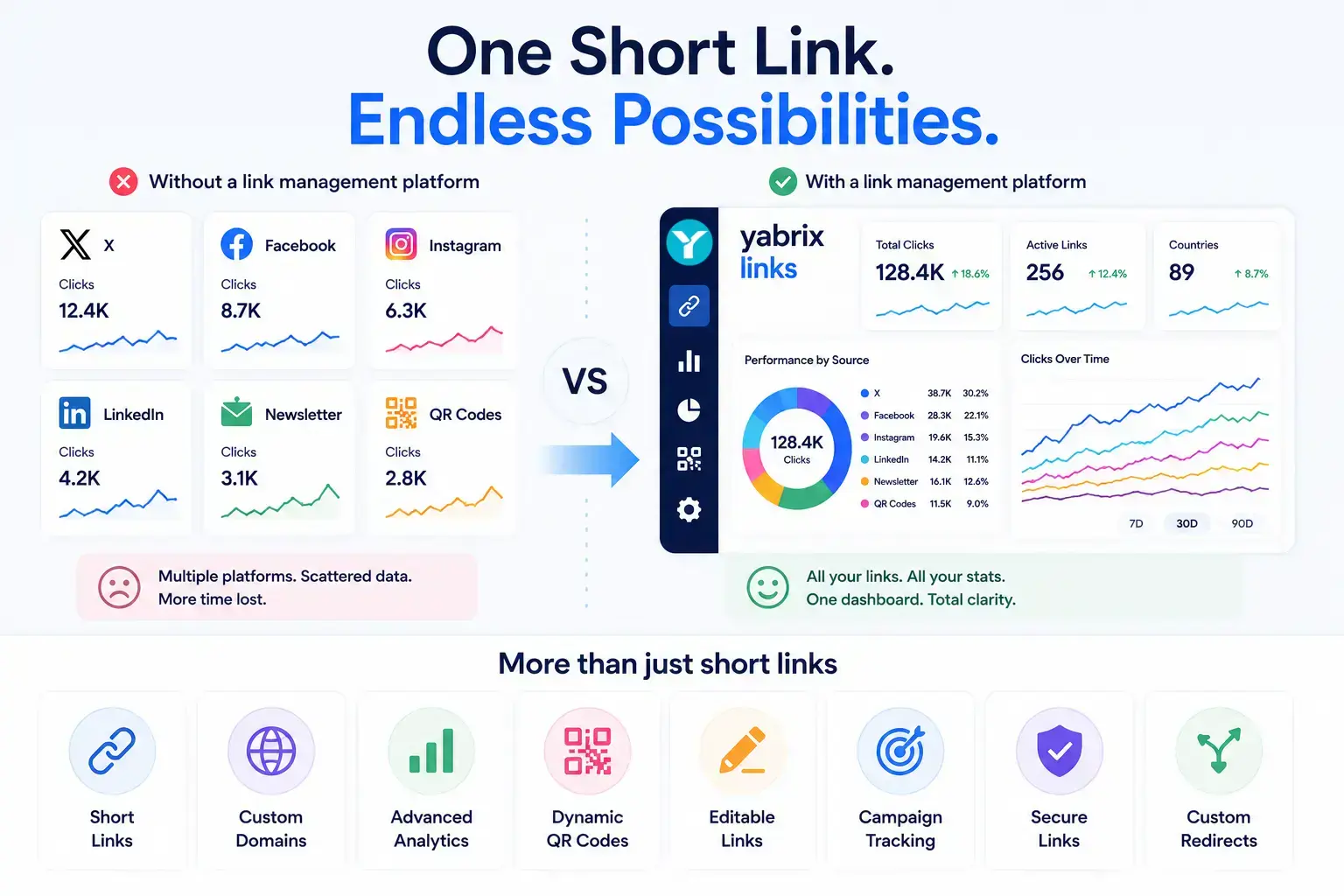
If you share the same piece of content across X, Facebook, Instagram, LinkedIn, a newsletter and a QR code, you'll likely end up checking six separate dashboards just to understand what happened.
Each platform counts clicks differently, displays data in its own format and only tells part of the story.
With a dedicated link management platform, all those interactions sit in one place. It doesn't matter where you shared a link — you get a single, unified view of how it performed. No more jumping between tools.
That saves time, obviously. But it also makes it far easier to compare campaigns side by side, spot which channels are pulling their weight and follow a link's full journey from the moment it goes live.
Instead of opening five dashboards to piece together how many clicks a campaign received, you look at one screen. One source. Regardless of where the link was posted.
For marketing teams running multi-channel activity, that kind of clarity isn't a luxury — it's a practical necessity.
The bottom line
Link shorteners remain relevant, though for quite different reasons than a decade ago.
Their real value no longer sits in trimming a URL. It's in everything you can build around that link: a more recognisable brand, campaigns that are easier to manage, better data for decision-making and a more polished experience for the person receiving it.
That thinking is behind Yabrix Links. Rather than a basic shortener, it's a link management platform built for clean URLs, custom domains, dynamic QR codes, click analytics and campaign management — all from one place. As part of the wider Yabrix ecosystem, it helps you understand not just how many people click a link, but how those links fit into a broader digital strategy.
Because today, a link isn't just an address. It's a marketing tool.