


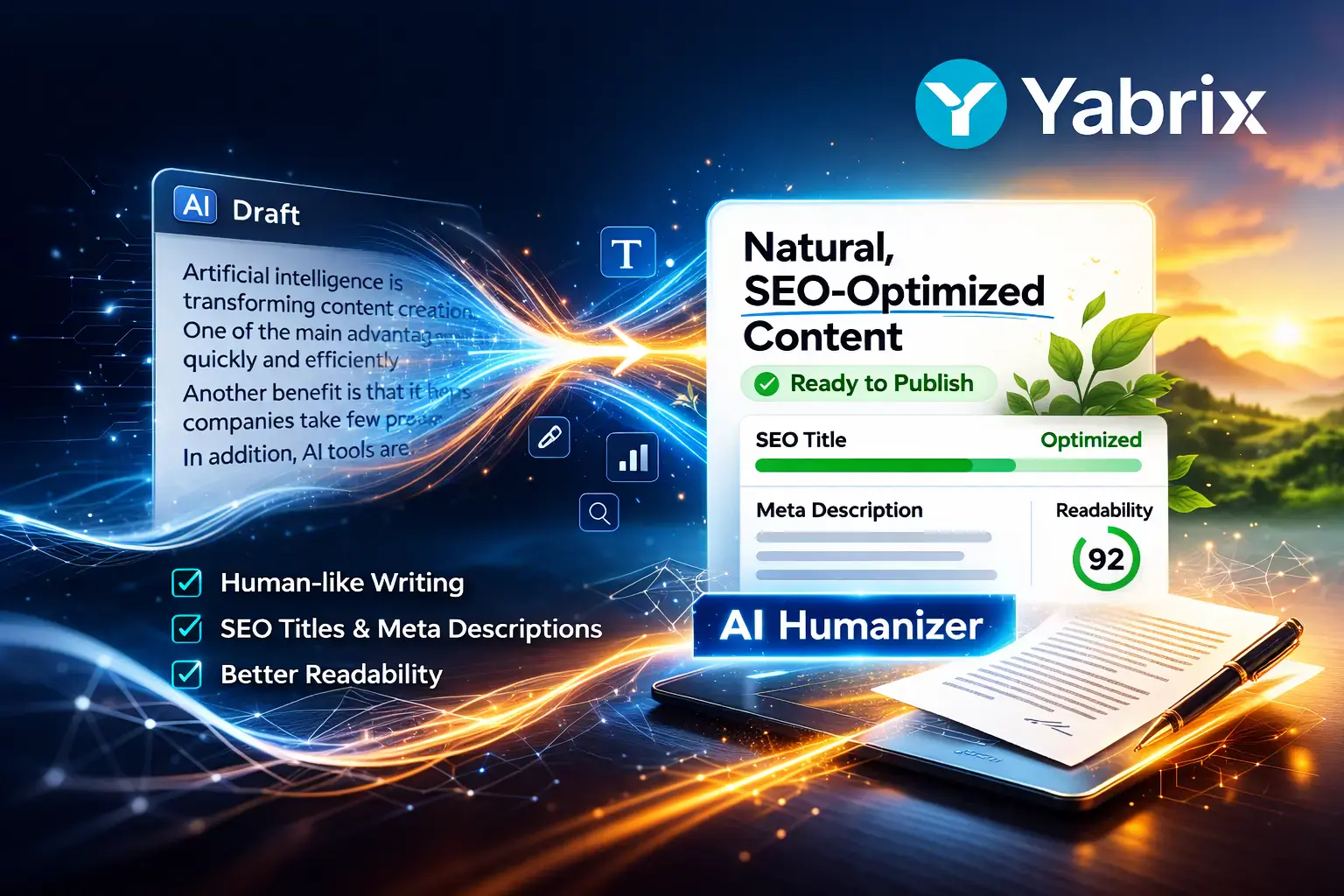
Human Text: turning AI drafts into natural, SEO-optimized content
AI-generated writing is already part of the daily workflow for digital media, content teams and marketing departments. But one problem keeps showing up: a large share of these texts sound artificial, follow predictable structures and don't truly connect with readers.
Human Text, integrated into Yabrix, was built to fix exactly that. The system takes AI-generated drafts and turns them into natural, readable content that's ready to publish. At the same time, it strengthens search visibility through better SEO titles, meta descriptions and editorial structure.
The problem with AI-generated content
Automatic content generation tools can produce drafts fast, but the results tend to come with several limitations:
- Repetitive or unnatural phrasing
- Predictable structures
- No clear editorial direction
- Titles that aren't built to attract traffic
- Generic meta descriptions
On top of that, many of these texts aren't designed for real publishing environments, where SEO, readability and audience interest determine whether content actually performs.
Human Text focuses on this exact step: turning automated drafts into editorial content that's ready to go live.
What Human Text does
Human Text is a system designed to analyze and rewrite AI-generated content so it reads naturally and performs better in search engines.
Its main functions:
- Rewrites text to sound more natural and easier to read
- Optimizes titles for SEO and Google Discover
- Generates well-targeted meta descriptions
- Tightens the editorial structure of each piece
- Strips out common patterns typical of AI-generated writing
The goal isn't to adjust a few sentences. It's to make the text work in a real editorial environment — without it feeling like it started from an automated draft.
Title optimization for SEO and Discover
The title is one of the most important elements in how an article performs.
Human Text analyzes the content and suggests titles optimized for:
- Google search results
- SEO positioning
- Visibility in Google Discover
- Higher click-through rates
Each article ends up with a headline designed not just to describe the topic, but to pull in organic traffic.

Meta descriptions that actually work
The meta description is another element that directly affects how an article shows up in search results.
Human Text generates clear, well-structured descriptions that:
- Accurately summarize the content
- Look better in search result listings
- Help increase click-through rates (CTR)
Meta descriptions don't always affect ranking directly, but they have a strong effect on how many users decide to click on a result.
Built for publishers and content teams
Human Text is made for environments where content production doesn't stop:
- Digital media outlets
- Specialized blogs
- Editorial projects
- Content marketing teams
In these workflows, starting from AI-generated drafts and quickly turning them into publishable content saves real time — without giving up editorial quality.
Human Text within the Yabrix ecosystem
Human Text is part of Yabrix, a platform that combines web analytics with content optimization tools.
While the analytics system helps understand how users interact with a website, Human Text focuses on the quality and performance of the content being published.
The idea is straightforward: give editorial teams and digital projects the tools to do both — produce better content and understand how it's performing.
Where this is heading
AI-generated writing will keep growing, but turning those drafts into useful, competitive content takes an additional step.
Human Text handles that step: it transforms AI-generated text into natural, well-optimized content ready to publish in environments where SEO, readability and reader engagement are what actually determine results.
Humanizing AI-generated text
Many teams rely on AI tools to create drafts quickly, but those drafts often sound mechanical or repetitive.
Human Text works as an AI humanizer, rewriting AI-generated content so it reads naturally and fits real editorial standards. The result is content that keeps the efficiency of AI while improving readability, SEO structure and overall quality.