

For more than twenty years, the goal behind any SEO work has been fairly straightforward: rank on Google, earn clicks, and drive traffic to a website. The entire digital ecosystem was built around that logic. Millions of sites have lived — with varying degrees of success — off their position in search results.
That model is starting to shift.
Artificial intelligence is already recommending web pages
The arrival of AI in search engines and digital assistants is changing how people find content. Tools like ChatGPT, Copilot, Claude and Gemini no longer just answer questions. They increasingly recommend pages, cite sources and send visits to the sites they deem most trustworthy.
At the same time, Google is making its own move with the expansion of AI Overviews — AI-generated answers that appear directly on the results page. In many cases, the user gets what they need without clicking a single link.
Organic traffic is going through a real shift. Anyone running a website needs to understand what's happening.
AI Overviews are reshaping search
AI Overviews represent one of the biggest changes internet search has seen in years. Rather than simply showing a list of links, Google now tries to answer the user directly with a summary pulled from multiple sources and generated by AI.
The consequence is blunt: more and more searches end without anyone visiting a page.
Publishers, content creators and site owners have started reporting drops in organic traffic since these generated answers appeared. In some cases the decline has been moderate. In others — particularly for informational queries — the fall has been steep.
This doesn't mean SEO is dead. Far from it. What it means is that SEO is changing shape.
Until now, the fight was about ranking in Google's top positions. Going forward, there's a second front: becoming one of the sources that AI systems draw on when they build their answers.
From SEO to GEO: a different way of working on visibility
This shift has given rise to a term that's gaining traction: GEO (Generative Engine Optimisation).
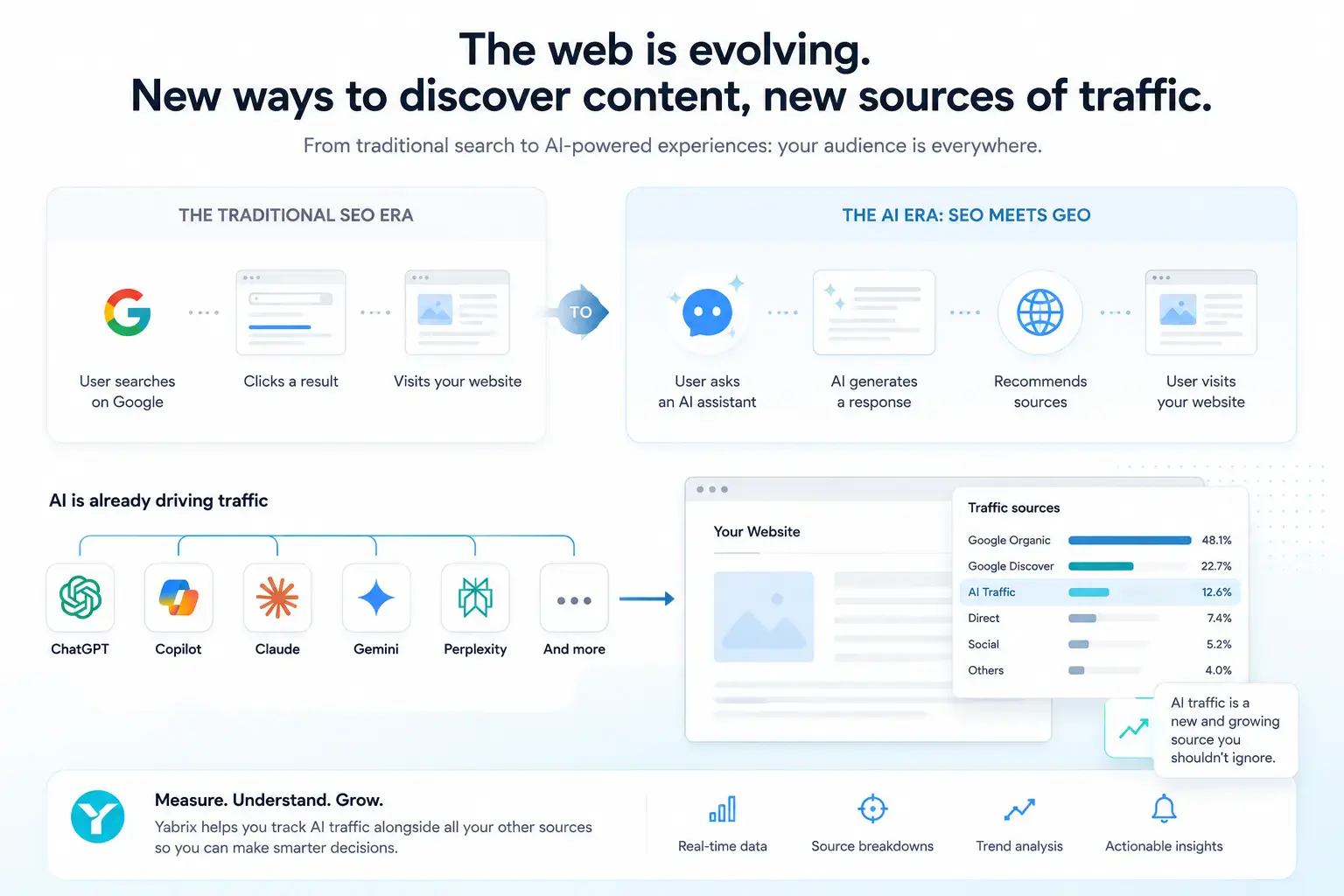
If SEO is about optimising a site for traditional search engines, GEO is about adapting content for AI-powered answer engines. The goal is no longer just a click. It's also about becoming a trusted source, being cited by AI tools and building brand visibility even when the user doesn't visit your site straight away.
It's a very young discipline. Nobody has all the answers about how it will work over the coming years. But a growing number of professionals are already adjusting their content with this new reality in mind.
AI is already sending real traffic
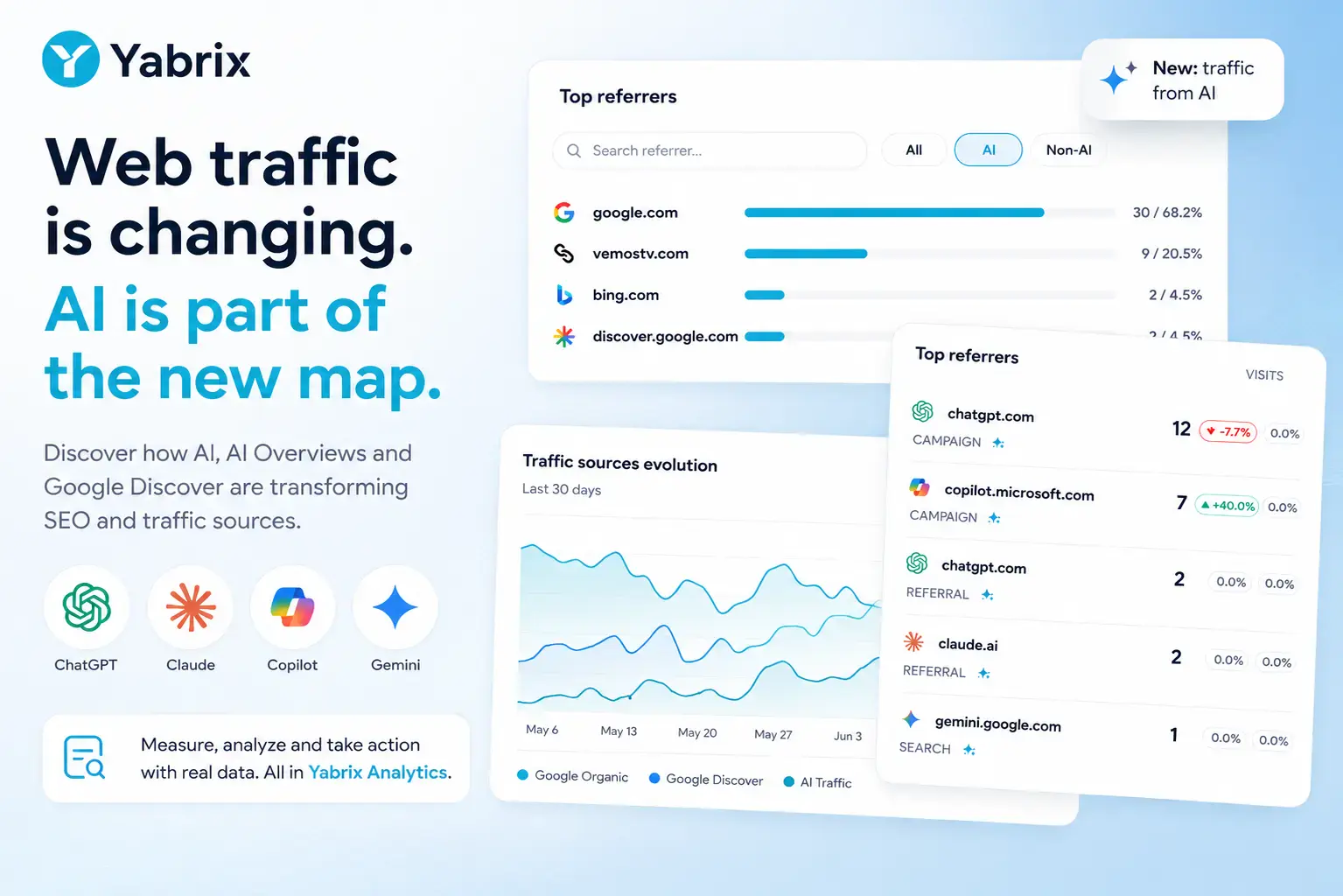
While much of the conversation focuses on lost clicks because of AI Overviews, there's another trend growing quietly in the background: AI platforms are already sending traffic to websites.
Every day, users arrive from ChatGPT, Microsoft Copilot, Claude, Gemini and other AI-based assistants. For most sites, this still accounts for a small share of total visits. But the direction is clear. Everything suggests these visits will keep growing as millions of people fold these tools into their daily routines.
The question is no longer whether AI will become a meaningful traffic source. The question is whether site owners are ready to understand it and measure it properly.
The problem: most analytics tools don't show it
For years we've learnt to measure traffic from Google, social media, newsletters and ad campaigns. Yet traffic from AI remains practically invisible in many analytics platforms.
Sometimes these visits get lumped into generic categories. Other times, there's simply no clear way to tell them apart. The result: many site owners have no idea how many visits they receive from AI tools, which ones send the most users, which pages are being recommended, or how this traffic source is trending over time.
That's a serious blind spot. It's very hard to adapt to a structural change when you don't even have the data to see it.
For the first time in years, a genuinely new traffic source is emerging. As happened with social media or Google Discover before it, understanding this channel before your competitors do can be a considerable advantage. At Yabrix, we've built a dedicated filter for AI referral sources so you always know exactly where your visitors are coming from.
Google Discover has become a primary audience channel
While some sites are watching parts of their traditional organic traffic decline, many digital publishers are finding a new growth route through Google Discover.
What was a secondary channel a few years ago has become, for a large number of publishers, one of their top audience sources. For some, it already generates more visits than Google Search itself.
Understanding which content performs on Discover, how traffic fluctuates, which topics attract the most attention and how dependent a site is on this channel — all of that matters more now than it ever has.
Quite a few publishers have started steering part of their editorial strategy towards this ecosystem, at a point when traffic from traditional search is becoming harder to predict.
If you want to go deeper on this, you can read our guide on how Yabrix Analytics detects Google Discover traffic and how to measure its performance accurately.
The future will be multi-source
For years, a large portion of the internet depended on a single traffic source: Google Search. That scenario appears to be fading.
The future points towards a far more diversified ecosystem. Users will discover content through traditional search engines, Google Discover, social platforms, newsletters and — increasingly — AI tools.
Brands and publishers that build an audience across several channels will be in a much stronger position when the next algorithm update lands or user habits shift again.
The new reality: knowing where your users come from
AI isn't replacing web traffic. It's creating new ways for people to discover content.
It's still early to know how far the digital ecosystem will change. But one thing looks certain: AI is already part of the traffic map online, and its share will only grow in the years ahead.
For a long time, we only worried about measuring what came from Google, social networks or email. From now on, we'll also need to track what arrives from artificial intelligence.
Because web traffic is changing. And the tools we use to measure it will have to change with it.