


Google Discover has become one of the largest traffic sources for publishers, blogs and content-driven websites. The trouble is, most teams only spot a Discover surge once it's already fading. By then, the window to act on it has narrowed considerably.
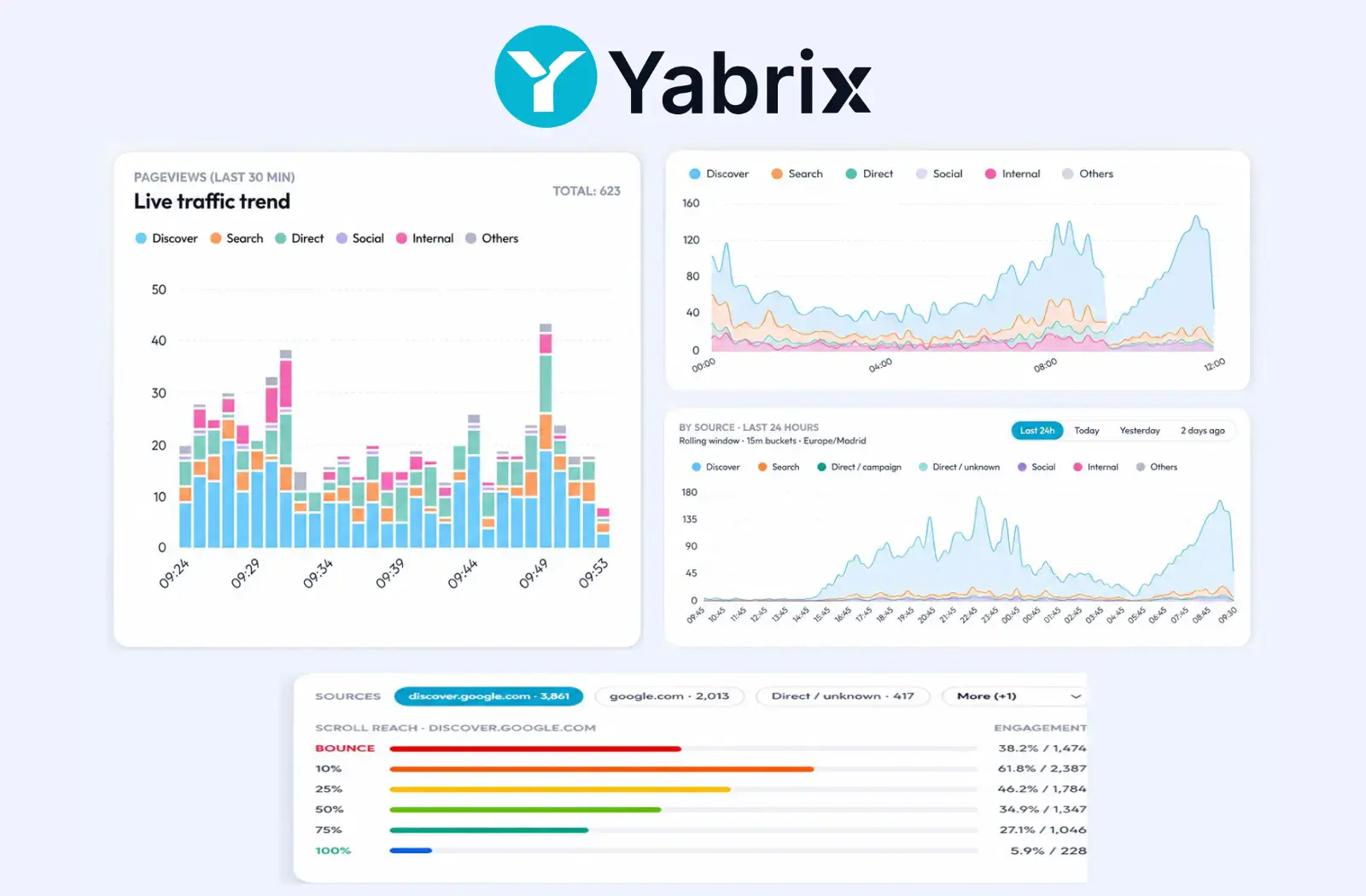
Google doesn't flag Discover traffic in any obvious way. There's no built-in label and no dedicated dimension in standard reports. To solve that, Yabrix Analytics developed its own real-time detection system, which identifies Discover traffic with 95% accuracy based on internal testing across multiple client accounts.
That's why real-time measurement matters here more than in most channels.
It's not enough to see that visits are climbing. What actually helps is knowing when that climb started, which source is driving it and what users do once they land on the page. That level of detail, available live, gives editorial and marketing teams something to work with while the traffic is still flowing.
Why Real-Time Tracking of Discover Traffic Matters
Discover traffic can scale fast. A single piece of content can start picking up momentum within minutes and account for a large share of the day's total audience. If you only find out hours later through a scheduled report, your response is already late.
Tracking this in real time lets you spot which content is gaining traction while it's still happening. You get a clearer read on what topics are resonating and how your audience is responding at any given moment.
For digital publishers and editorial teams, this isn't just about observation. It's about being in a position to act — adjusting internal links, promoting related pieces, or shifting editorial priorities based on what's actually working.
How to Assess the Quality of Discover Traffic
One of the most common mistakes when looking at Google Discover data is focusing purely on visit numbers. Volume tells you something, but on its own it doesn't tell you whether that traffic is worth anything.
To get a proper read on quality, look at metrics like time on page, scroll depth, bounce rate and whether users engage with other content on the site. These indicators show whether someone actually read the article or bounced within seconds.
Doing this analysis in real time sharpens the picture considerably. You can compare how different types of content perform, spot which editorial approaches attract more engaged readers and distinguish between a headline that generates clicks and one that holds attention.
A high-traffic piece with a 90% bounce rate and three seconds of average time on page is not the same as one that keeps readers scrolling. Both might look identical in a traffic dashboard. They're not.
What You Can Actually Do With Live Data
When you can see Discover traffic as it arrives, you can make faster, better-informed decisions.
Some practical examples:
- A piece is gaining traction — you add internal links from it to related articles, directing that audience deeper into the site.
- A topic is clearly resonating — you prioritise follow-up content or give it more prominent placement on the homepage.
- A headline is pulling strong clicks but retention is poor — you revisit the content to check whether it's delivering on what the title promises.
- Two similar articles are live, but one is outperforming the other — you study what's different and apply those findings going forward.
None of this requires guesswork. It requires data that's current, not data from a report compiled the following morning.
Moving From Reactive to Informed
Most teams still treat Discover traffic as something that happens to them. A spike appears, someone notices, there's a brief conversation about it, and then everyone moves on. The content that caused it may or may not get any follow-up.
Real-time tracking changes that dynamic. It turns Discover from an unpredictable bonus into something you can monitor, learn from and respond to with purpose.
This doesn't mean you can control what Discover picks up — you can't. But you can control what you do when it does. And the faster you see it happening, the more options you have.
For marketing and editorial decision-makers, the value here isn't theoretical. It's operational. It's the difference between a team that reacts to yesterday's numbers and one that works with what's happening right now.